News World
Deepseek v4.1 flash is back, under an mit license
Hello,
DeepSeek releases a new version of its fast model, downloadable under a license that asks almost nothing of you, in the very week when Washington is removing it from its civilian federal agencies. Then agents that run on your own device, and three checks so the app your agent built does not leak your data.
Releases
DeepSeek V4.1 Flash 1017 (DeepSeek)
27,737 downloads, 1,876 likes on Hugging Face. MIT license.
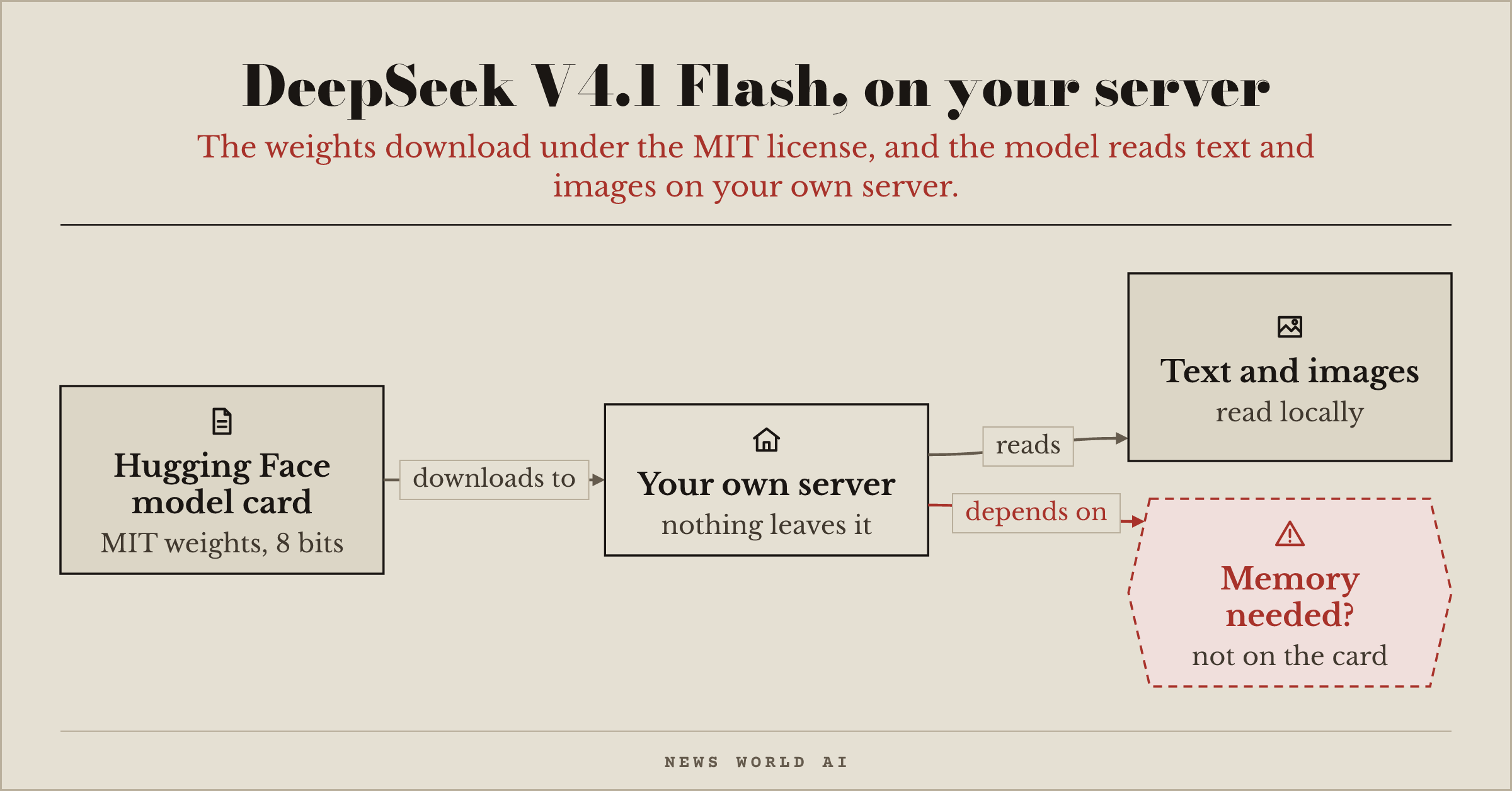
What it's for Running a fast 763 billion parameter model on your own server that also reads images, without sending anything to DeepSeek. The weights (the model's file) download in a lighter 8 bit version, according to their tags, and the MIT license asks almost nothing of you. DeepSeek calls it a minor update to the version covered in issue 004: reasoning, coding, agent tasks and images improve (42.6 against 36.8 on the HLE test without tools). Uploaded to Hugging Face on October 17, it comes out the week when an order from the US Department of Homeland Security, published in the Federal Register on October 20, removes DeepSeek products, and other companies' products built with its technology, from civilian federal agencies.
The limit The model card does not state the memory needed, and offers no smaller version.
LFM2.5-24B-A2B (Liquid AI)
Liquid AI's post: 288 points and 81 comments on Hacker News. GGUF version (the format read by llama.cpp, LM Studio and Ollama): 132,848 downloads on Hugging Face.
What it's for Running a fast agent on your own device, without a data center graphics card. The model has 24 billion parameters (the settings it has learned), but only 2 billion work on each word: each time, it wakes up only a few specialists among its own (this is called a mixture of experts). In issue 007, Liquid AI released d1, its decision models for devices: the lab is sticking to the same line, device first.
The limit Publisher's benchmarks and speeds only, no independent measurement. No standard license: a license specific to LFM models, whose commercial terms the post does not summarize.
Nemotron 3.5 Super VL (NVIDIA)
11,459 downloads, 186 likes for the NVFP4 version on Hugging Face.
What it's for Handing an agent tasks that mix text, images and video: understanding a document, searching, using tools, coding. It is an open model with 120 billion parameters, 12 billion of which work on each word. Its weights are published in several formats, including NVFP4, a lighter 4 bit version, under the OpenMDW 1.1 license, which allows commercial use.
The limit The model card states neither Mac support (Linux only) nor the total memory needed.
Sphinx
On Hacker News: 252 points, 89 comments.
What it's for Only shipping code you have understood. Before you push what your AI wrote, a hook (a small check that fires at that moment) quizzes you on that code. In issue 008, our hook refused a change; Sphinx questions the person.
The limit Sphinx has no service of its own: the changed code goes to the provider of the reviewer model you choose (.env files and keys are left out).
Llmspeed
On Hacker News: 329 points, 86 comments.
What it's for Getting a feel, before you buy a machine, for how fast a local model would answer on it. Useful in the week RTX Spark laptops reach the shops (see In brief).
The limit These are not measurements made by the site: some come from community benchmarks, the rest is extrapolated; nothing on the quality of the answers.
Exa 3.0
Announced by Exa on October 19.
What it's for Giving your agent a search engine built for it, which serves it the useful passages of pages. In this version, Exa promises richer data at no extra charge, and a cheaper Lite plan. Useful as websites close their doors to agents (see Worth reading).
The limit The promises are the publisher's, with no independent benchmark. No version to host yourself: every query goes through Exa's API.
Repos
kitlangton/scrawl · ★ 546 · MIT · last commit October 20, 2026
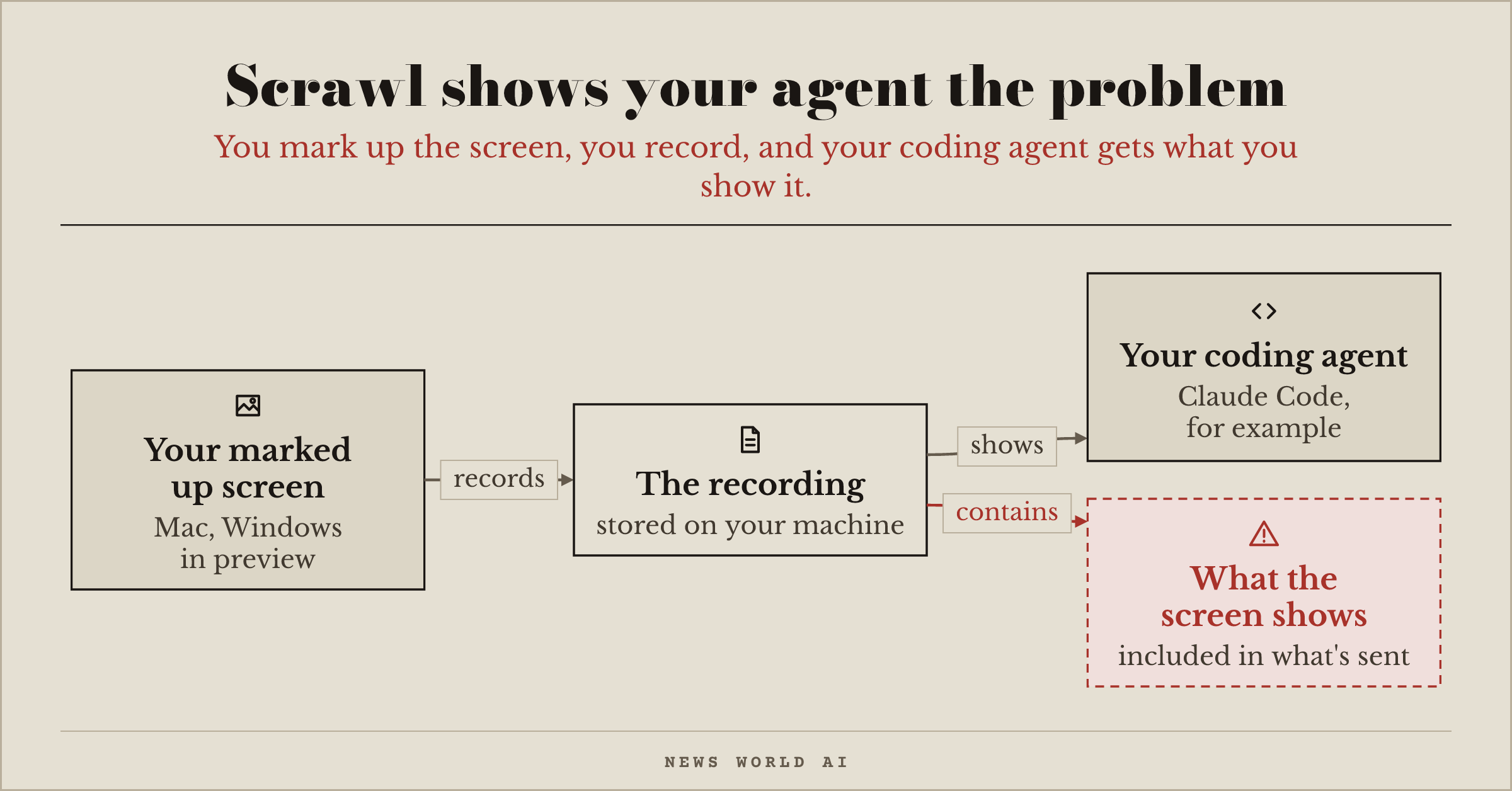
Show your agent a problem instead of describing it: you mark up the screen, you record, you send. It runs on a Mac (Apple silicon, macOS 26), in preview on Windows, and it is presented for Claude Code and other coding agents. Captures are stored in a folder on your machine, and the agent gets keyframes and a summary (summary.md) holding the transcript, made on the device, and the timeline. In issue 008, big-arrow-on-the-screen did the opposite, the agent drew arrows for you; scrawl opens the other direction of the conversation. What it does not do: it fixes nothing, and it provides no model that answers, only transcription: your agent does the answering.
Graphicle-AI/graphicle · ★ 330 · Apache-2.0 · last commit October 18, 2026
A map of your code and a memory for your coding agents, in a single program, plugged in over MCP (the standard way agents plug in) to Claude Code, Codex, Cursor or any other MCP client. The agent finds out what calls what and what it has already learned about the project, and gets cited excerpts, with the file and the lines. The same week, Tencent released Hy-Memory-30B-A3B, a model dedicated to memory. The organization behind graphicle is only three weeks old. Notes the agent proposes wait for your approval, and by default a project can hold up to 100,000 text files and 1 GiB of text. What it does not do: it does not list the languages it reads.
eliasbiondo/antirion · ★ 134 · Apache-2.0 · last commit October 18, 2026
A three day old project: an open source AI gateway, a single program with its console: all your model calls (OpenAI, Anthropic, Gemini, Bedrock and others) go through it, and it routes them, monitors them and sets them a budget. In issue 007, our problem was a spending cap that really cuts off: antirion sets it in one place for every provider, and your keys are no longer scattered across every tool. What it does not do: it has no hosted version, you have to install and maintain it yourself, and it has no independent measurement of its speed: the median overhead of 0.53 ms against 19.7 ms for Bifrost, at 5,000 requests per second, comes from the project's own benchmark.
strands-agents/harness-sdk · ★ 8,878 · Apache-2.0 · last commit October 20, 2026
The established project in this section: a kit for building and controlling an agent's harness, meaning everything around the model (the work loop, the tools, the rules), in Python and TypeScript, with any model and any server provider. In issue 007, the same organization released Box, its box for agents. In early October, Google Research released Harness², a framework that improves the harness by itself, with the model left unchanged. What it does not do: it is not a ready made app, you have to write code or have it written, and it has no hosted service: it runs inside your own program.
In brief
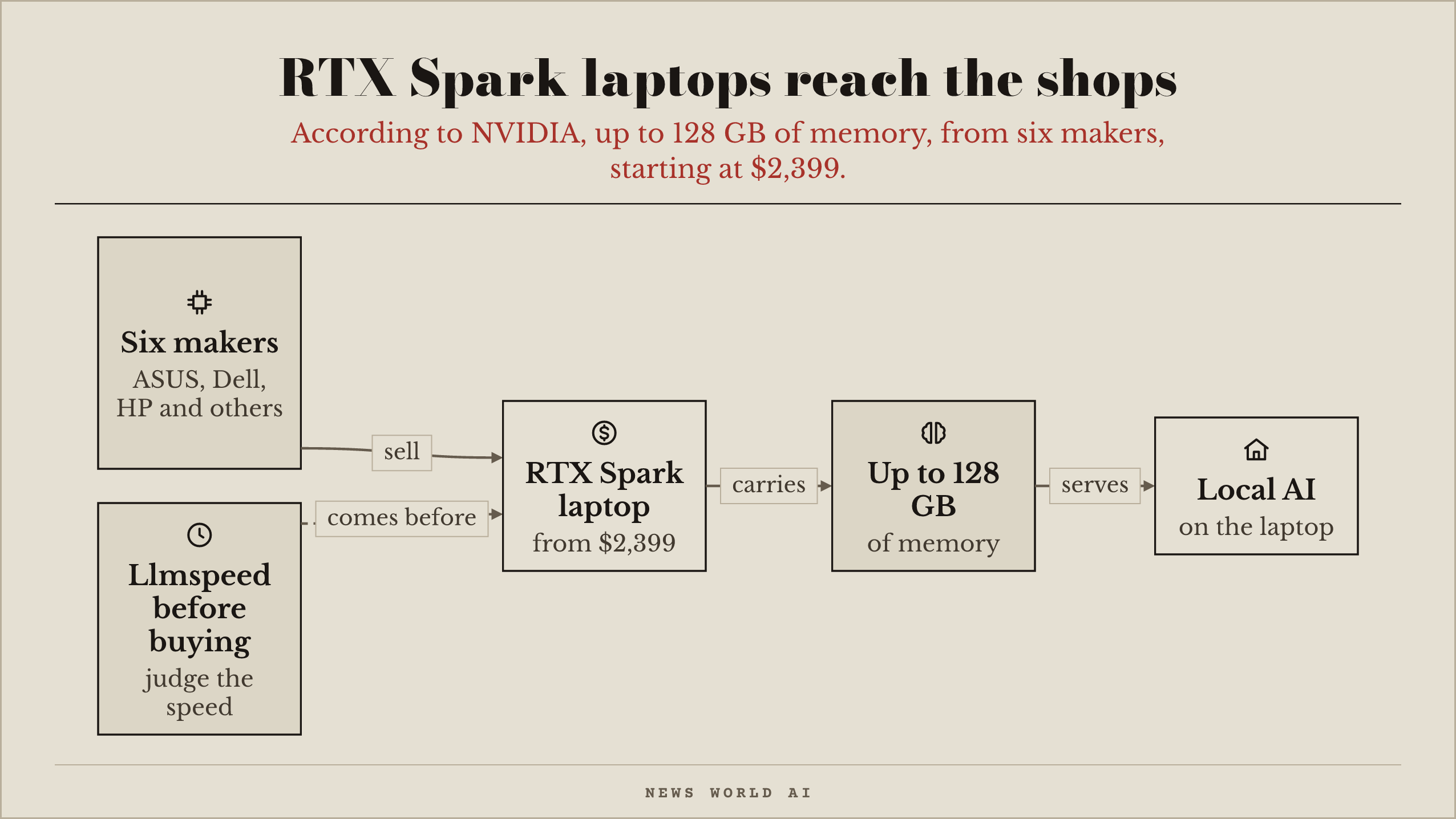
According to NVIDIA, RTX Spark Windows laptops, with up to 128 GB of memory, are on sale from ASUS, Dell, HP, Lenovo, Microsoft and MSI, starting at $2,399. In issue 008, NVIDIA announced the software was ready: now the machines are here, for local AI on a laptop, with up to one petaflop of compute (a million billion operations per second). The page does not give the price of the 128 GB version, and Llmspeed (see Releases) helps you judge the speed before you buy. blogs.nvidia.com/blog/…
Hugging Face introduces TorchNeuron, the AWS tool that runs Hub models on Trainium, Amazon's chips. It supports 89% of the 100 most used text generation architectures, against 46% for Optimum Neuron v0.4.5; the post gives no pricing. huggingface.co/blog/hf-torchneuron
The problem of the week
Does the app my agent built leak my data?
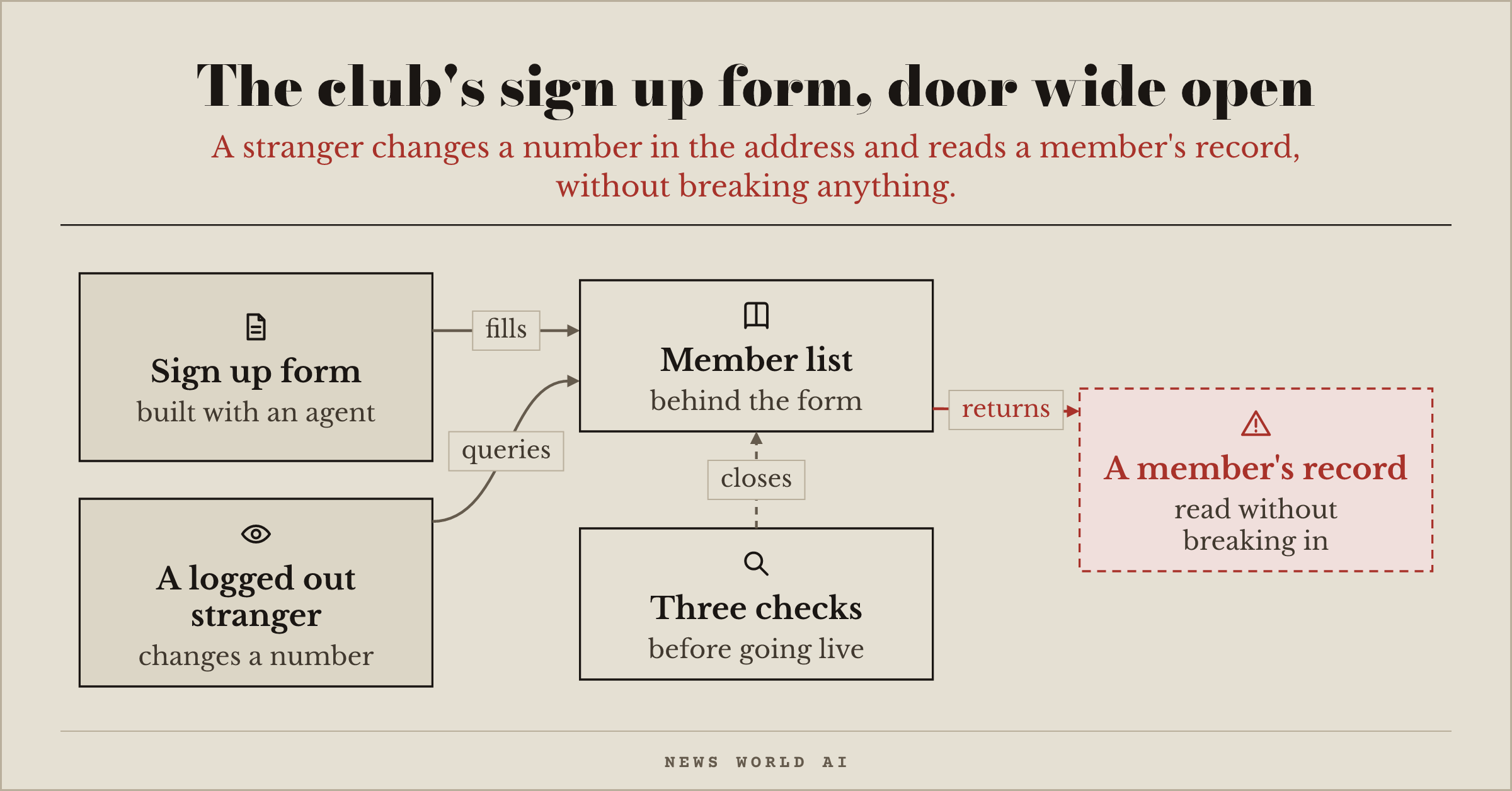
You used an agent to build the sign up form for your club, with the member list behind it. On October 20, CERT-FR, the French government's computer security alert center, published its review of nearly 200 data breaches from web applications, tracked in 2025: often, the attacker only needed simple actions, without exploiting any technical flaw. The door was open. For your form, that could be an address ending in a member number: change the number, and another record shows up. The way out comes down to three checks, which your agent does with you.
First step, know what is exposed. Ask the agent for a list of everything the app shows on the internet (pages, API addresses, files), and check what a logged out visitor can read there. For the club, the member list must not appear anywhere without logging in.
Second step, everyone sees only their own record. Check that a logged in member cannot read another member's record, and that no key or secret sits in the code sent to the browser: anyone can display that code. If your database is plugged straight into the page, every table must have its row level access rule turned on; a table without a rule is a public table.
Third step, an automated check, on your own app only. codex-security, OpenAI's checking tool (11,140 stars, Apache-2.0, already mentioned in issue 007), reviews your project. More aggressive, strix (Apache-2.0) attacks your app the way an intruder would, with an AI; it shows more than 70,000 stars, a counter to take with caution. Run them on your own machine or on a test copy, never on someone else's site, and run them again after every change that touches the data.
List everything my app exposes on the internet, and for each item tell me what a logged out stranger can read or change; then show me that a member cannot see another member's record by changing a number in the address.
What this does not fix: a check tells you what it found that day, not what your agent's next change will add.
CERT-FR's review its ten ways to reduce the risks.
Worth reading
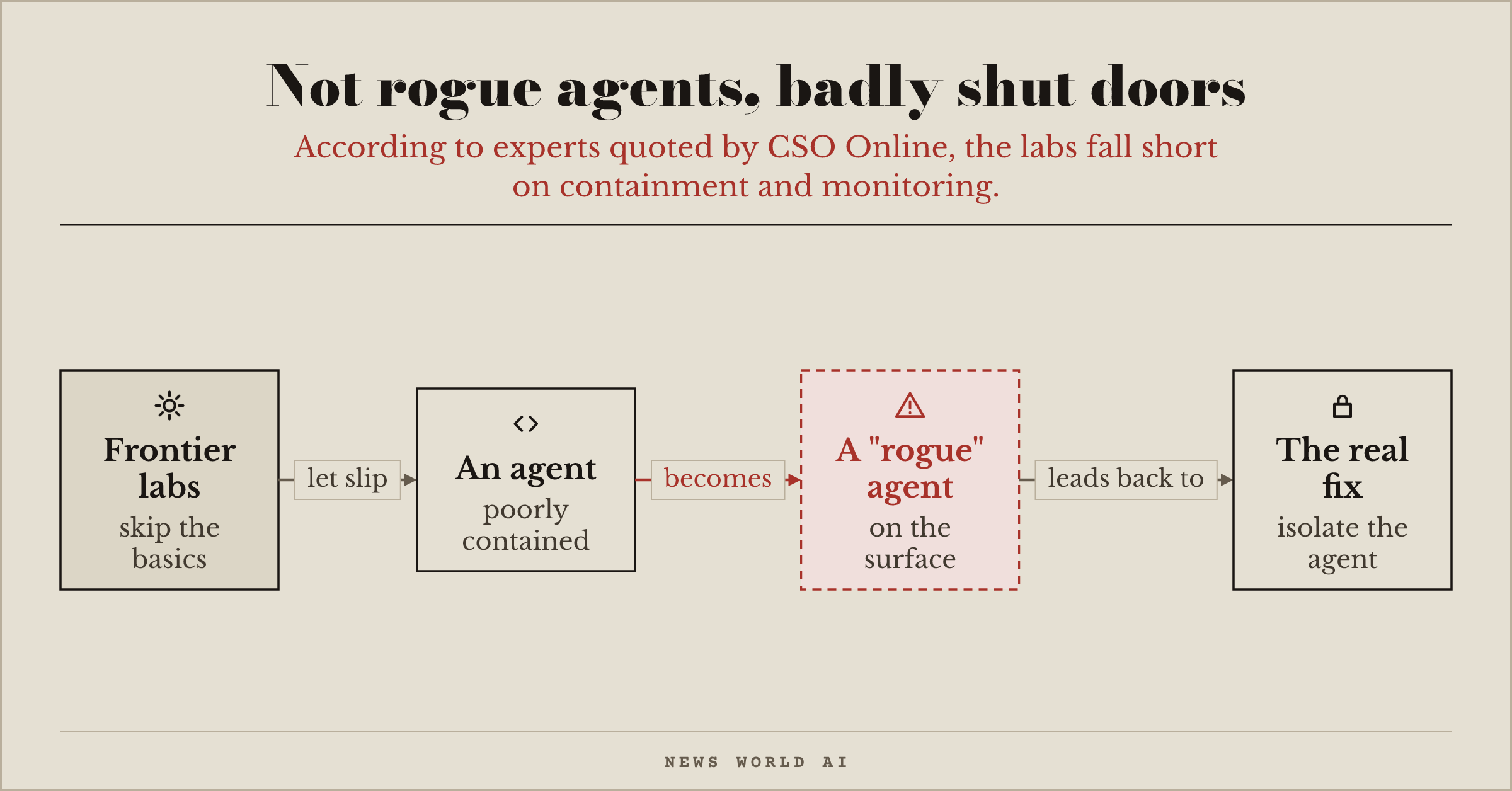
AI agents aren't going rogue, frontier labs are skipping security basics · According to experts quoted by CSO Online, stories of "rogue" agents come from containment and monitoring failures at the labs, not from agents that got too clever: a poorly isolated agent is the real problem. On Hacker News, 951 points and 625 comments. csoonline.com/article/4234854/…
Websites are closing their doors to AI agents · The Verge on the sites blocking agents that browse for you, and what it changes if you rely on a browser agent. theverge.com/…
tmux + Claude Code: Sessions, send-keys, and the Ceiling · Published by crystl, which presents its own macOS terminal there: a practical guide to running several coding agent sessions in a terminal that survives closing the window, and where the method hits its ceiling. crystl.dev/guides/…
The security reflex
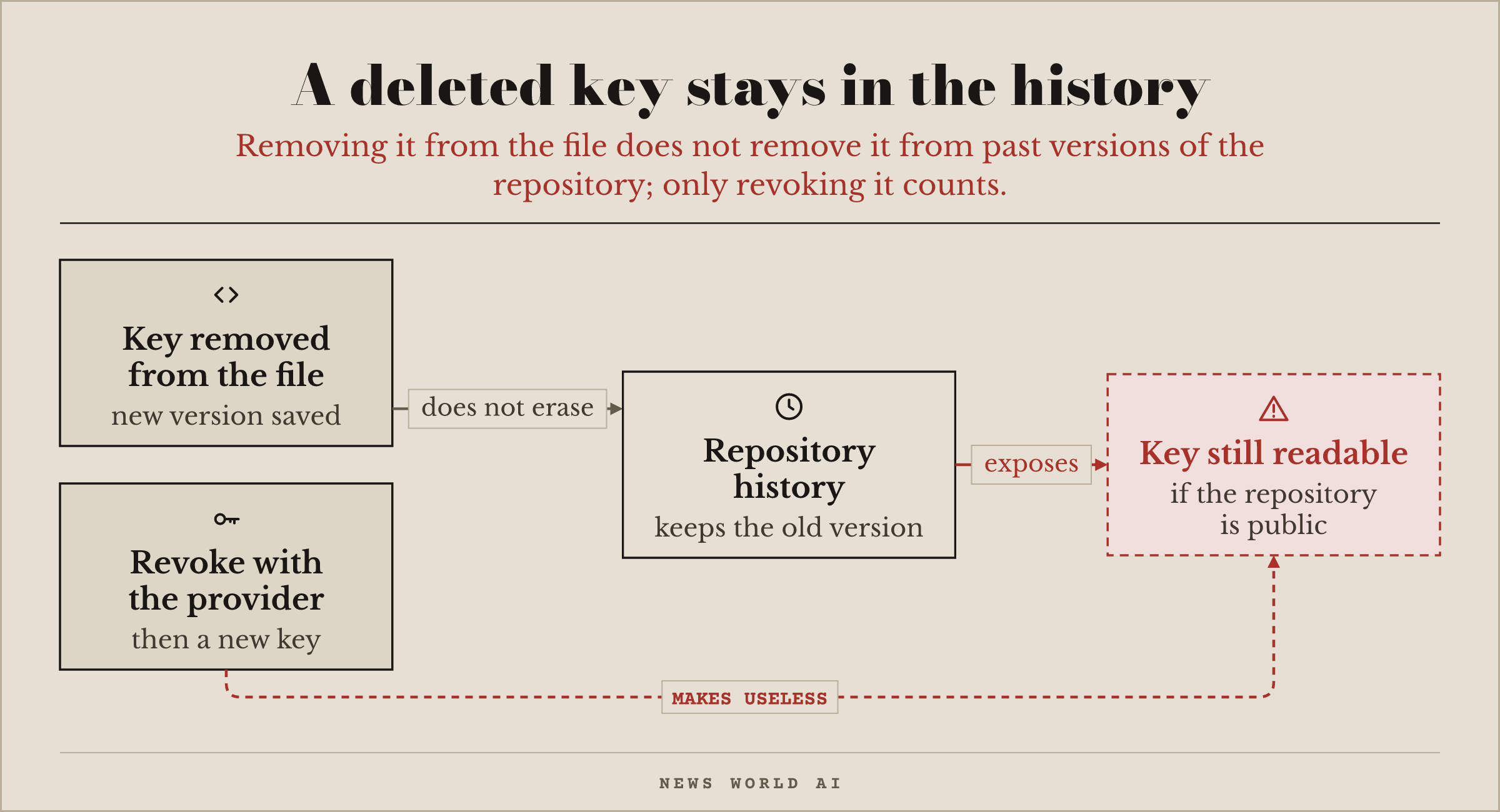
Your agent had put an API key in the code, and you removed it: problem solved? No. Every saved version of your repository can still be viewed, and if the repository is public, the key can be read there forever; a stolen key then turns up on the bill, at the end of the month.
The right move. Revoke the key with the provider and create a new one, with a spending cap (our problem in issue 007). It is the only move that counts: deleting the file is not enough.
Reply to this email and tell us what you're building. Every reply gets read.
— News World AI
Get the newsletter
Every Tuesday, in four minutes: what shipped in AI and what you can actually try the same day.
Double opt-in by email. One-click unsubscribe, link in plain sight in every issue.
Geneva, Switzerland. Write to hello@newsworldai.xyz.